Kitchen note
Gears Drive the World
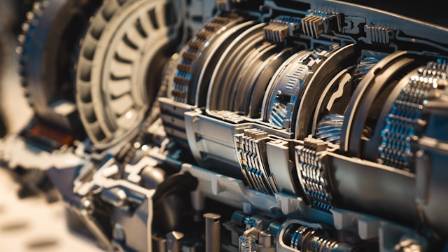
Gears are among the oldest mechanical components ever created, originating from the basic engineering concepts of the lever and wheel. Over thousands of years, this simple invention has developed into many advanced forms, including oval gears used in flow measurement systems, worm gears found in certain musical instruments, and compact strain wave gears that play an important role in robotics.
Liam Weston
Cook
Bench note
The full story and useful tips are below.
Shelf
Plant kitchen
Gears are among the oldest mechanical components ever created, originating from the basic engineering concepts of the lever and wheel. Over thousands of years, this simple invention has developed into many advanced forms, including oval gears used in flow measurement systems, worm gears found in certain musical instruments, and compact strain wave gears that play an important role in robotics.
Even after centuries of development, gears remain essential in countless technologies. They are used in nuclear power plant control systems, automobile steering and transmission mechanisms, espresso machines, and even the structural systems of advanced spacecraft such as the James Webb Space Telescope. Engineers continue to improve this traditional technology, and one of the most significant recent developments in commercial aviation has been driven by innovative applications of gears.
Quick Overview of Gear Development
The earliest known gears date back thousands of years, with some of the first examples being used in devices designed to observe and calculate the movement of celestial objects.
Large-scale gear manufacturing became possible when new machines and production techniques were developed, allowing complex gear teeth to be created with greater accuracy, consistency, speed, and lower costs.
As gears became more advanced and were combined into complex gear systems, their applications expanded across many industries. Today, gear technology continues to evolve and support modern engineering achievements.
How Gears Work
Gears operate based on the mechanical principle of the lever, allowing machines to adjust rotational speed and torque between rotating shafts. In simple terms, a gear is a circular component with specially designed teeth around its outer edge. These teeth connect with the teeth of another gear or multiple gears to transfer mechanical power and regulate movement.
Different gear designs use different tooth structures. Traditional spur gears feature straight teeth aligned with the shaft, while helical gears use angled teeth that provide smoother operation and improved performance.
The most widely used gear tooth design is based on the involute curve of a circle. Similar to an Archimedean spiral, this curve allows gear teeth to engage through rolling contact instead of sliding contact, reducing friction and heat generation. Involute teeth also maintain a consistent speed relationship between connected gears.
By modifying gear sizes, engineers can increase or decrease rotational speed and torque. These simple but highly effective mechanisms allow humans to take energy from a source, adjust it according to specific requirements, and deliver controlled power to various applications.
Ancient Origins of Gear Technology
The history of gears can be traced back to around 3000 BCE. Ancient Chinese travelers crossing the Gobi Desert reportedly used two-wheeled chariots equipped with early directional control systems. These vehicles used wooden gear mechanisms connected to the wheels to operate an extended pointer that remained aimed south despite changes in direction.
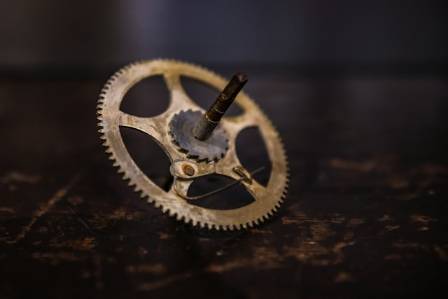
Early watermills and windmills also relied on wooden gears with peg-like teeth to transfer power. Ancient tower clocks later used crown gears as part of their mechanical timekeeping systems.
One of the most remarkable examples of ancient gear technology is the Antikythera mechanism, discovered in 1901 inside the remains of a Roman shipwreck. Believed to have been created in Rhodes between 150 and 100 BCE, this device functioned as an astronomical calculator powered by a complex clockwork system.
The mechanism was likely used to predict the positions of the Sun and Moon, forecast solar eclipses, and determine dates for major ancient competitions. A hand-operated crank connected to a gear system controlled a series of interconnected components known as epicyclic or planetary gears.
Planetary gears consist of a central sun gear connected to surrounding gears held within a carrier and enclosed by a ring gear. Although the device had been underwater for nearly two millennia and suffered severe corrosion, researchers determined that it contained at least 30 metal gears with triangular-shaped teeth.
The Development of Modern Gear Manufacturing
Although gears were used in specific applications for centuries, they did not become widely adopted until advances in mathematics and manufacturing made them more practical.
During the late 1600s, improved understanding of complex mathematical concepts, including involute curves, allowed engineers to design more precise and reliable gears. In 1863, Josiah Willard Gibbs completed the first engineering doctoral thesis in the United States, focusing on the design of gear teeth and the requirements needed for practical gear operation.
The Industrial Revolution during the early 1800s transformed gear production. New manufacturing methods, including form cutting and hobbing, allowed manufacturers to produce gear teeth more quickly and accurately.
Hobbing uses a specialized cutting tool known as a hob to shape gear teeth. English inventor Joseph Whitworth patented an early hobbing method for spiral gears in 1835, while Robert Hermann Pfauter later introduced improved hobbing techniques for spur and helical gears in 1897.
These advances made it possible to create complex involute gear teeth with greater precision, consistency, and affordability compared with older manufacturing methods.
The Expansion of Gear Applications
As gears became easier to produce, they were incorporated into a wide range of machines. Engineers used gears to improve performance by increasing efficiency, accuracy, speed, and reliability.
Multiple gears were often combined into systems called gear trains. These arrangements allowed machines to transfer and modify mechanical power in more advanced ways.
The relationship between connected gears is measured using a concept called the gear ratio. A gear ratio describes the difference in rotational speeds between two linked gears.
The gear connected to the power source is called the driver or input gear, while the gear receiving the transferred power is known as the driven or output gear. For example, a 3:1 gear ratio means the input gear rotates three times for every one rotation of the output gear.
The point where two gear teeth make contact is called the pitch point, and the circular path connecting these points is known as the pitch circle.
Understanding Gear Ratios and Mechanical Advantage
A gear’s pitch circle radius is related to the number of teeth it contains. Because of this relationship, gear ratios can be calculated by dividing the number of teeth on the driven gear by the number of teeth on the driver gear.
When a smaller input gear drives a larger output gear, torque increases while rotational speed decreases. Conversely, when a larger input gear drives a smaller output gear, torque decreases while speed increases.
For example, in a 3:1 gear reduction system, the output gear produces three times the torque of the input gear while rotating at one-third of its speed. Reducing speed in this way is known as gear reduction, a technique widely used in machinery, vehicles, robotics, and countless other engineering systems.

More from the kitchen

· en
How To Draw A Kitchen
Skyler Dean

· en
Facts about dolphins
Andrew Kingswell

· en
The White Tiger: Genetics, Myths, and Conservation—Unveiling Nature’s Rare Marvel
Liam

· en
How to Identify 8 Common North American Fir Trees
Amelia Hayes

· en
Ultimate Healthy Grain Bowl
Amira Hart

· en
What You Need To Know Before Adopting A Lovely Pet Rabbit
Reynolds Clara