Kitchen note
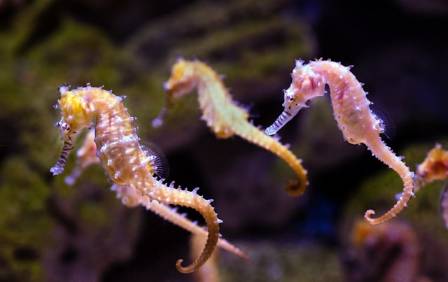
Diving into the whimsical world of Seahorses
Seahorses are among the most unusual animals found in the ocean. With their horse-like heads, curled tails, and remarkable behaviours, they are unlike almost any other marine species. Let’s explore some interesting facts about these fascinating creatures.
Elena Ward
Cook
Bench note
The full story and useful tips are below.
Shelf
Plant kitchen
Seahorses are among the most unusual animals found in the ocean. With their horse-like heads, curled tails, and remarkable behaviours, they are unlike almost any other marine species. Let’s explore some interesting facts about these fascinating creatures.
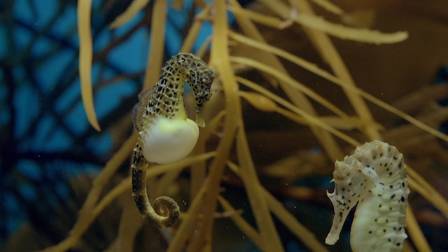
Male Seahorses Give Birth to Their Young
During breeding season, seahorses take part in a special courtship ritual. They swim together, change colours, and wrap their tails around each other as part of the bonding process. The female places her eggs into a special pouch on the male’s body, where fertilisation takes place and the embryos continue developing.
When the babies are ready to be born, the male uses repeated muscular contractions to push hundreds of tiny, fully developed seahorses out of his pouch and into the surrounding water.
Seahorses Often Stay With One Partner
Many species of seahorses are monogamous, meaning they usually remain with the same mate for long periods and sometimes for life. Having a consistent partner can improve their chances of successful reproduction, especially during each breeding season.
Seahorses Are Weak Swimmers but Skilled Hunters
Although seahorses are not strong swimmers, they are effective predators. Instead of chasing their prey, they rely on ambush techniques. Their long, tube-shaped snouts allow them to quickly draw in water and capture small animals nearby.
They feed on any tiny living creature that is small enough to pass through their mouths.
They Feed Through Suction
Seahorses consume food by creating suction with their snouts, similar to the action of a small vacuum cleaner. Since they cannot chew, their food is broken down while being swallowed.
When they encounter larger prey, their flexible snout can expand to help them take in the food.
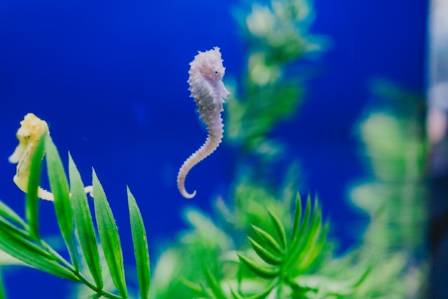
Seahorses Do Not Have Stomachs
Unlike many other animals, seahorses lack a stomach. Food moves through their digestive system very quickly, which means they need to feed frequently throughout the day.
Their diet mainly includes tiny crustaceans such as planktonic copepods and brine shrimp. Some seahorses can consume thousands of these small organisms in a single day.
There Are Many Different Seahorse Species
Scientists have identified around 46 recognised species of seahorses. Because many species have similar appearances and rely on camouflage, distinguishing between them can sometimes be difficult.
Their Tails Help Them Survive
A seahorse’s curled tail is a valuable tool for survival. They use it to grip onto sea plants, coral, and other underwater structures, helping them remain stable in moving currents and making it easier to capture food.
Their tails can also provide protection. When threatened, seahorses often curl their bodies and bring their heads closer to their bodies to make themselves less vulnerable.
Camouflage Helps Them Hide and Hunt
Seahorses come in many colours, including yellow, brown, red, and orange. Many have patterns or markings that allow them to blend into coral reefs, sea grass beds, and other underwater environments.
Their ability to camouflage helps them avoid predators such as crabs while also allowing them to approach prey without being noticed. Small crustaceans and other tiny invertebrates are common parts of their diet.
Seahorses Are Actually Fish
Despite their unusual shape and appearance, seahorses are a type of fish. Their name comes from their horse-like head shape and the Latin name Hippocampus, which means “horse-like creature.”
Like other fish, seahorses have a swim bladder that helps them control their position in the water. They also breathe through gills, just like most other fish species.
Human Activities Are Their Greatest Threat
Seahorse populations have declined significantly because of destructive fishing methods, targeted capture, and the international wildlife trade.
Other dangers include habitat destruction, climate change, and accidental capture as bycatch in fishing operations.
Conservation organisations such as The Seahorse Trust and Project Seahorse are working to protect these unique animals and their habitats. People can also help by reducing plastic waste, recycling more often, and making choices that support healthier oceans.
More from the kitchen
· en
Eurasian Tree Sparrows and House Sparrows
Ryan Ellis

· en
How to design your wooden ring box of walnut wood
Freya Willow
· en
Easy Sakura Jelly Recipe
Lauren Mitchell

· en
Classic Japanese Cars That Shaped Automotive History
Thalia Dawn
· en
The Amazing and Versatile Cucumber
Kaia Sterling

· en
Tokyo Skytree
Amelia Rose Wilson