Kitchen note
The Evolution of Space Rovers
Welcome to another science capsule. Today, we’re taking a closer look at one of the most fascinating machines humans have sent beyond Earth: the space rover. These robotic explorers have allowed us to investigate the surfaces of the Moon, Mars, asteroids, and other celestial bodies from a distance that would otherwise be impossible.
Cora Lane
Cook
Bench note
The full story and useful tips are below.
Shelf
Plant kitchen
Welcome to another science capsule. Today, we’re taking a closer look at one of the most fascinating machines humans have sent beyond Earth: the space rover. These robotic explorers have allowed us to investigate the surfaces of the Moon, Mars, asteroids, and other celestial bodies from a distance that would otherwise be impossible.
We’ll look at where rover technology began, how these machines evolved, some of the most important rover missions in history, and what future exploration may bring. To understand that journey, we first need to go back to the earliest rovers ever placed on another world: the lunar rovers.
The First Generation of Rovers
The story of planetary rovers begins in 1970 with the Soviet Union’s Lunokhod program. The most important mission in that program was Lunokhod 1, which began its journey in November of that year. It became the first remotely operated rover to successfully travel across the surface of another celestial body.
Lunokhod 1 reached the Moon aboard the Luna 17 lander and landed in the Mare Imbrium region. Once deployed, the rover spent nearly a year operating on the lunar surface, finally ending its active mission in October 1971. During that period, it demonstrated that a mobile robotic vehicle could successfully travel across extraterrestrial terrain while being controlled from Earth.
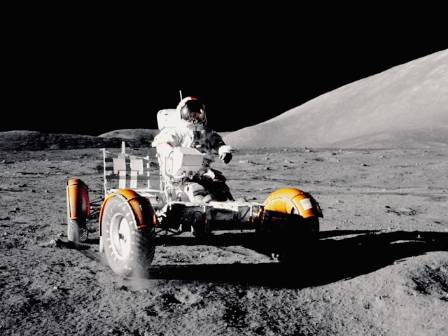
As happened repeatedly during the Space Race, the United States soon developed its own approach to lunar surface mobility. The result was the Lunar Roving Vehicle, commonly called the “Moon Buggy.” These vehicles were used during the Apollo 15, Apollo 16, and Apollo 17 missions between 1971 and 1972.
The Lunar Roving Vehicles became an important part of the final Apollo expeditions. Unlike earlier robotic rovers, these vehicles were designed to carry astronauts. Each could transport two crew members, along with equipment and lunar samples collected during their journeys. They are also historically significant because they remain the first, and so far only, crewed rovers ever operated on another world.
Another important early lunar rover was Lunokhod 2. Like Lunokhod 1, it was an unmanned vehicle designed to investigate the Moon. It traveled to the lunar surface aboard Luna 21 and conducted a variety of scientific observations.
Among its tasks were examining the lunar environment, observing solar X-rays, and investigating the physical properties of the Moon’s surface material. The study of lunar soil and surface conditions would become an important theme in the development of rover technology.
A New Era of Exploration: Mars Rovers
From the Moon, rover exploration eventually expanded to Mars. Martian rovers have become perhaps the most recognizable planetary robots, partly because many of their missions have taken place during the modern era and have provided an extraordinary amount of information about the Red Planet.
However, the success of these machines was built upon decades of earlier experimentation. The first rover to demonstrate that mobile exploration could work on Mars was Sojourner.
The Sojourner Breakthrough
Sojourner became the first rover to operate on Mars in 1997 as part of NASA’s Mars Pathfinder mission. Its primary purpose was not simply to conduct scientific research. It was also an important technological experiment designed to determine whether a small robotic vehicle could successfully move across and operate on the Martian surface.
That objective may sound straightforward today, but at the time it represented a major challenge. No human had ever visited Mars, and engineers had to design the rover using information collected from previous observations and spacecraft missions.
Sojourner successfully demonstrated that a rover could function on Mars. Its performance provided engineers and scientists with valuable experience that would influence the design of many later Martian vehicles.
The rover operated alongside the Pathfinder lander, which photographed Sojourner as it traveled and transmitted information between the rover and Earth. Landers are an important part of many rover missions because the rover itself must first be delivered safely to the surface before it can begin exploring.
The Mars Exploration Rovers
Two other historic Martian vehicles appeared before the much larger modern rovers: Spirit and Opportunity. Both were part of NASA’s Mars Exploration Rover program and launched in 2003, reaching Mars in 2004.
The two vehicles significantly expanded our understanding of the planet while also demonstrating remarkable durability. Spirit continued operating for roughly six years. Near the end of its mission, it became trapped in Martian sand, but before that happened, it had traveled approximately 7.73 kilometers, or 4.80 miles, across the surface.
Opportunity performed even more impressively. Although its planned mission was much shorter, it continued functioning for 5,352 Martian solar days, or sols. That translates to approximately 15 Earth years.
During its extraordinary career, Opportunity traveled around 45.16 kilometers, or 28.06 miles. It investigated rocks, soil, and geological formations across Mars, contributing enormous amounts of information about the planet’s ancient environment and history.
Spirit and Opportunity also introduced an important operational improvement compared with Sojourner. Both vehicles were capable of communicating directly with Earth, allowing them to operate more independently and conduct much longer scientific campaigns.
Why Are Space Rovers So Slow?
You may wonder why a rover that spends several years exploring a planet sometimes travels only a few dozen kilometers. The main explanation is simple: rovers are not designed for speed.
These machines have to conserve energy while carrying instruments and protective systems capable of surviving extremely challenging environments. They may have to deal with radiation, extreme temperatures, dust, uneven terrain, and other hazards.
Their wheels and mechanical systems are therefore designed primarily for reliability and efficiency rather than rapid travel. As a result, rover speeds can be surprisingly low, often reaching only fractions of a kilometer per hour.
That may seem slow compared with an ordinary vehicle on Earth, but for planetary exploration, moving carefully and safely is far more important than traveling quickly.
The Modern Generation of Rovers
We can now move into the current era of rover exploration. Modern rovers include advanced vehicles operating on Mars and the Moon, as well as specialized machines designed for completely different environments.
The technology has advanced dramatically since the days of Lunokhod and Sojourner. Modern vehicles can carry sophisticated scientific instruments, communicate across enormous distances, navigate challenging terrain, and perform tasks that earlier generations of engineers could only imagine.
NASA’s Active Mars Rovers
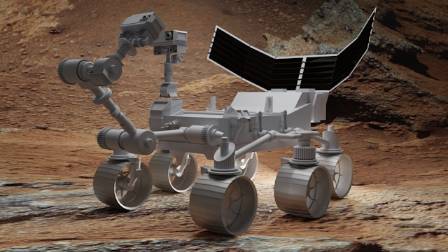
Two of the best-known modern Martian rovers are Curiosity and Perseverance. Both remain central to NASA’s exploration of Mars and represent the current state of robotic surface exploration on the planet.
Curiosity is approximately the size of a car, making it considerably larger than many of the earlier rovers. Its scientific equipment is also far more advanced, allowing it to study Martian rocks, soil, geology, and climate in considerable detail.
One of Curiosity’s major goals is to investigate whether Mars once possessed environmental conditions capable of supporting microbial life. Rather than simply searching for life itself, the rover examines whether the planet ever had the ingredients and conditions necessary for habitability.
Perseverance was developed as a successor to Curiosity and shares some similarities with its predecessor, although it has its own scientific objectives and equipment. Its mission includes searching for signs of ancient microbial life and collecting rock and soil samples that could eventually be returned to Earth.
Perseverance also carried an unusual companion to Mars: the Ingenuity helicopter. This small experimental aircraft demonstrated powered flight in the thin Martian atmosphere, making it an especially memorable addition to the rover mission.
China’s Lunar Exploration Program
After looking at NASA’s Martian explorers, it is worth returning to the Moon and examining China’s contributions to modern lunar rover exploration.
The Yutu Rovers
China sent its first Yutu rover to the Moon in 2013. Yutu launched in December and landed later that same month, representing the first successful soft landing on the lunar surface since 1976.
The rover encountered technical problems during its mission and eventually became unable to move after its second lunar night. Nevertheless, it remained scientifically productive for nearly three years, far exceeding its originally expected operational lifetime of about three months.
Even after losing mobility, Yutu continued collecting scientific information. Its ground-penetrating radar allowed researchers to investigate the layers beneath the lunar surface, including measurements reaching approximately 30 meters, or 98 feet, below the ground.
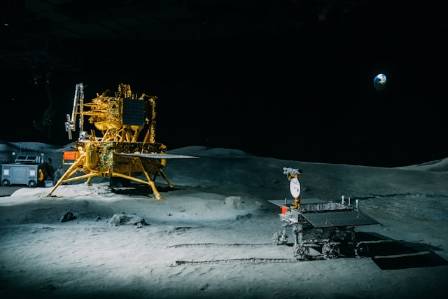
Its successor, Yutu-2, was launched in December 2018 and reached the lunar surface about a week later. This mission achieved something especially significant: Yutu-2 became the first rover to make a soft landing on the far side of the Moon.
Since then, Yutu-2 has continued exploring the lunar surface and collecting scientific data. It has also established the record for the longest-operating rover on the Moon and continues to extend that record.
Yutu-2 carries a lunar penetrating radar system capable of investigating underground structures at different depths. Its measurements provide scientists with valuable information about the composition and geological history of the lunar surface.
Yidong Xiangji
China’s more recent lunar rover development can be seen in Yidong Xiangji, the small rover associated with the Chang’e 6 mission.
The mission traveled to the far side of the Moon and accomplished a historic objective by collecting samples from this previously unexplored region and bringing them back to Earth. The successful return of the sample capsule marked an important milestone in lunar exploration.
Yidong Xiangji formed part of this ambitious mission and demonstrated how increasingly compact robotic vehicles can contribute to complex exploration campaigns.
India and Japan Enter Lunar Rover Exploration
India has also become an important participant in modern lunar exploration. In 2023, the Indian Space Research Organisation launched Chandrayaan-3, carrying the Pragyan rover.
Its objective was to perform a soft landing near the Moon’s south polar region. On August 23, 2023, the mission successfully reached the lunar surface.
Pragyan traveled approximately 0.1 kilometers, or 0.062 miles, while carrying out its assigned scientific tasks. The achievement was particularly important because Chandrayaan-3 became the first mission to successfully land near the lunar south pole.
Japan has also developed lunar rover technology. Its recent lunar exploration included two small vehicles known as LEV-1 and LEV-2, which were deployed from the SLIM lunar lander.
LEV-1 uses a distinctive hopping method to move across the lunar surface. LEV-2 is even more unusual. Developed through cooperation involving Sony, Doshisha University, and the toy manufacturer Tomy, the tiny rover weighs only about 250 grams.
Its design allows it to change its shape to adapt to the uneven lunar environment. The concept demonstrates how future exploration vehicles do not necessarily need to resemble conventional wheeled robots.
Rovers Beyond the Moon and Mars
Although Mars and the Moon have received the majority of rover attention, robotic surface exploration has also reached other celestial bodies.
One important example came from Japan’s Hayabusa2 mission to the asteroid 162173 Ryugu. The mission deployed several small exploration vehicles, including MINERVA-II Rover-1A, MINERVA-II Rover-1B, MASCOT, and MINERVA-II Rover-2.
These machines represented a major expansion of rover technology because an asteroid presents a very different environment from either Mars or the Moon. Instead of simply driving across a relatively stable surface, robotic vehicles operating on an asteroid must deal with extremely low gravity and unusual terrain.
The Future of Rover Exploration
The history of rovers is far from finished. Future missions are expected to send robotic explorers to increasingly distant and unfamiliar environments.
One particularly exciting example is NASA’s Dragonfly mission, which is planned to travel to Saturn’s moon Titan. The mission is scheduled to reach Titan in the 2030s and will use a rotorcraft rather than a traditional wheeled rover to investigate the moon’s surface and atmosphere.
The evolution from Sojourner to machines designed for worlds such as Titan shows just how much rover exploration has advanced. Sojourner proved that a small robotic vehicle could operate successfully on another planet, opening the door for increasingly sophisticated explorers.
Future lunar exploration will also bring another major development: the return of crewed rovers. NASA’s Artemis program includes plans for renewed human activity on the Moon, while China is also developing plans for crewed lunar exploration. These missions could eventually combine astronauts with new generations of robotic vehicles.
The Continuing Evolution of Space Rovers
From Lunokhod 1 crawling across the Moon to Perseverance investigating Mars and Yutu-2 exploring the lunar far side, rovers have transformed our ability to study worlds beyond Earth.
Each generation has introduced new capabilities. Early vehicles demonstrated basic mobility, later machines proved that long-term exploration was possible, and modern rovers now perform sophisticated scientific research while operating millions of kilometers away from their controllers.
There are already many future rover missions being developed, so the next chapter of robotic exploration promises to be just as interesting as the last. Whether they travel across the Moon, Mars, asteroids, or distant moons, these machines will continue acting as our eyes, instruments, and explorers on worlds that humans cannot yet reach themselves.
More from the kitchen

· en
Dongchuan Red Land: Where China’s Hills Turn Red
Elara Whitman
· en
The Exciting Future of Holographic Three Dimensional Displays
Adrian Fletcher
· en
The world's tallest flying bird
Mireya Sloan

· en
Big Canyons and Beautiful Beaches
Wyatt Flynn
· en
Secrets of a Whale Tail
Alaric Brooks
· en
The Colours of the Canton Tower
Lily Morgan