Kitchen note
The Incredible Story and Evolution of the International Space Station
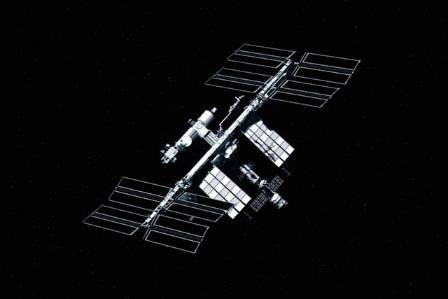
The International Space Station travels continuously in low Earth orbit. Five primary space agencies collaborate to operate this colossal facility. NASA represents the United States alongside Roscosmos from Russia. The European Space Agency joins forces with JAXA from Japan and the Canadian Space Agency. It stands as the largest human spacecraft ever built in history. Crew members have lived aboard the station continuously since November two thousand.
Isla Graham
Cook
Bench note
The full story and useful tips are below.
Shelf
Plant kitchen
The Massive Engineering Triumph Orbiting Earth
The International Space Station travels continuously in low Earth orbit. Five primary space agencies collaborate to operate this colossal facility. NASA represents the United States alongside Roscosmos from Russia. The European Space Agency joins forces with JAXA from Japan and the Canadian Space Agency. It stands as the largest human spacecraft ever built in history. Crew members have lived aboard the station continuously since November two thousand.
This massive orbital complex flies about four hundred kilometers above the ocean surface. It zips around our world at roughly seven point seven kilometers per second. That speed allows the habitat to complete fifteen orbits every single day. The overall array spans over one hundred meters across. Its internal pressurized volume matches the size of a large commercial jetliner.
Engineers constructed the outpost using a modular architecture. The structure features two main operational segments. The Russian segment works alongside the American orbital segment. A central truss structure holds vast solar arrays and heat radiators. Sixteen primary pressurized modules house research facilities and living quarters. Crew members arrive onboard modern spacecraft like Crew Dragon and Soyuz. Cargo craft bring fresh supplies to keep the orbital lab running smoothly.
The Historic Evolution of Global Space Cooperation
Global space cooperation began long before the assembly of this orbital outpost. The American and Soviet space programs collaborated during the nineteen seventies. They successfully joined two separate spacecraft during the famous Apollo Soyuz mission. Early plans for joint orbital stations emerged shortly after that flight. Both nations eventually pursued independent space station projects during the nineteen eighties.
The United States designed a modular outpost named Space Station Freedom. International partners quickly joined the ambitious project. Japan and European nations planned dedicated laboratory modules. Rising financial expenses created severe political challenges in Washington. At the same time Russia planned its own station named Mir Two. Financial struggles following political changes threatened that project as well.
Leadership from both nations decided to combine their separate efforts in nineteen ninety three. This historic partnership created the modern space station program. Space shuttles visited the Russian Mir station to practice joint operations. Construction of the new orbital outpost began in late nineteen ninety eight. The first permanent expedition crew arrived safely in November two thousand. The complex has hosted hundreds of visitors from dozens of nations since then.
Unlocking Scientific Secrets in Zero Gravity
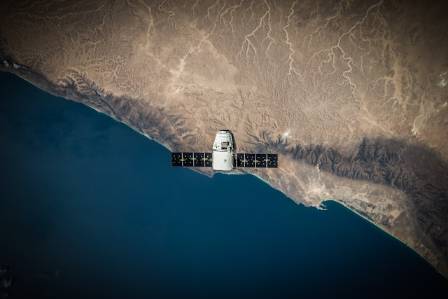
The space station functions as a floating scientific laboratory. Scientists on Earth conduct experiments across many different research disciplines. Astrobiology and physics thrive inside the unique microgravity environment. Researchers also study space weather, atmospheric chemistry, and human biology. Astronauts dedicate many hours each week to conducting these experiments.
A massive particle physics detector sits mounted on the station exterior. This powerful instrument collects cosmic rays to search for dark matter. The unique microgravity environment allows scientists to study fundamental physics clearly. Researchers analyze how fluids mix without gravity pulling materials down. Materials science experiments help improve industrial manufacturing techniques back on Earth.
Living in space exposes organisms to intense radiation and zero gravity. Scientists monitor changes in astronaut bone density and muscle mass. Remote medical ultrasound techniques tested onboard now help emergency doctor teams on Earth. Extremely durable bacteria strains survived multi year exposure outside the station. These findings offer valuable clues about the origin and spread of life.
Preparing for Deep Space and Inspiring Future Generations
The station serves as a crucial proving ground for deep space travel. Engineers test environmental control equipment required for future missions to Mars. Astronauts gain essential experience maintaining complex machinery far above Earth. Ground teams learn to manage long duration space missions safely.
Educational programs connect students directly with orbiting crew members. Astronauts conduct live science demonstrations using amateur radio gear. Space agencies provide interactive digital learning materials for classrooms worldwide. These initiatives inspire young students to pursue careers in technical fields.
Cultural projects bring the experience of spaceflight closer to the public. Astronauts have recorded music videos and narrated documentary films onboard. Visitors can explore detailed virtual reality simulations of the station interior. The continuous human presence in orbit remains a powerful symbol of international unity.
More from the kitchen

· en
The best private island resorts in the world
Elias Vaughn

· en
Jiuzhaigou: A Natural Wonderland of Lakes, Waterfalls and Forests
Charles Whitmore

· en
The Most Beautiful Snow-covered Mountains in the World
Soren Blackwell

· en
Top 10 Illustration Styles 2026
Zoe Harper

· en
Top 7 Most Beautiful Islands in the World
Celeste Rowan

· en
The Breathtaking White Egrets And The Shocking Lies We Tell Ourselves
Cameron Olivia